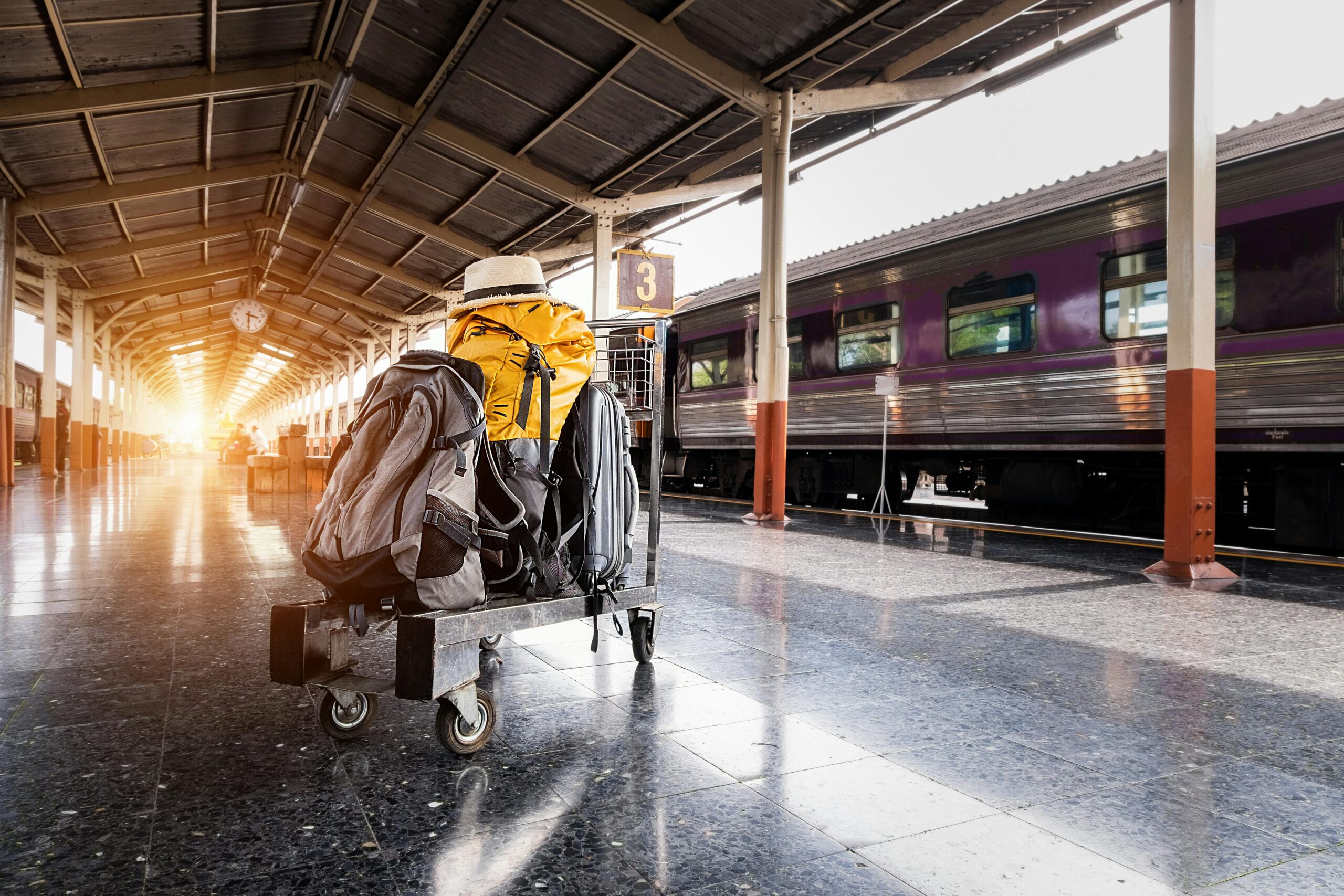
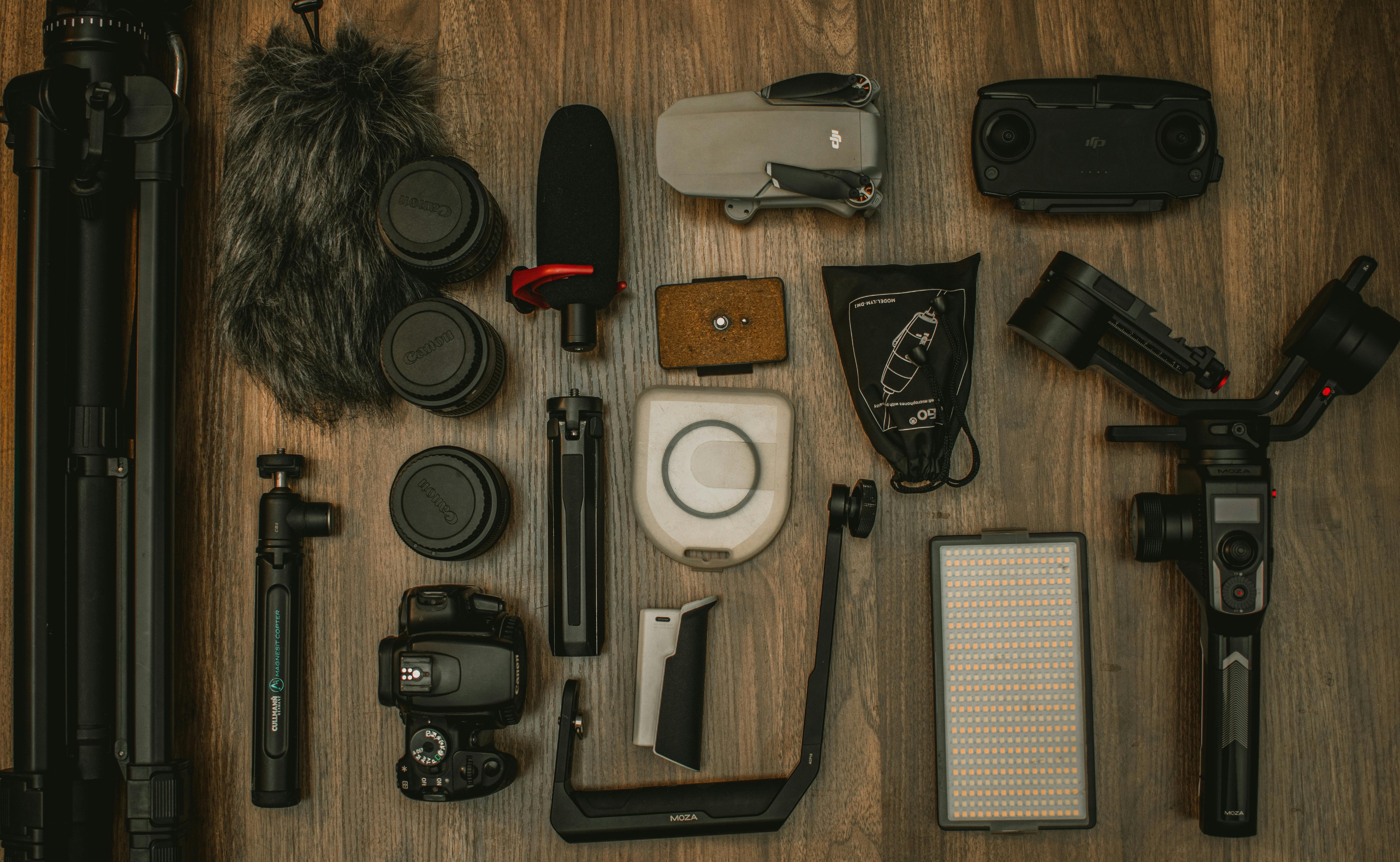
We own six dedicated cameras. Our everyday travel setup is much smaller than that number makes it sound.
On a normal destination day, the pair we actually reach for is the Insta360 Ace Pro and the Insta360 X4. Paul’s Samsung Galaxy S24 Ultra is already in his pocket. The Xtra Muse, two Sony bodies, three lenses, full-size tripod and gimbal usually remain at the house, and the drone is a separate decision for particular trips.
That was not the plan when we bought everything. It is simply where we ended up after learning how quickly filming a trip can get in the way of having one.
This is not a list of everything we own followed by reasons you should buy it. It is the smaller list: what still earns space in our travel bag, what normally does not, and what we would buy first if we had to start again.
We bought every item in this article ourselves. Nobody pays us to recommend a particular camera or brand. Some links on this site are affiliate or referral links, which means we may earn a commission at no additional cost to you.
The camera we would buy first
If you want one small camera that can handle most of a trip, our answer is the Insta360 Ace Pro.
It is waterproof, the stabilization makes handheld walking footage usable, and the screen flips forward so we can see the frame when one of us is talking to the camera. More importantly, it does not demand much attention. There is no lens decision and very little setup. We can pull it out in the rain, on a boat or beside the road, press record and get on with the day.
That convenience has mattered more to us than specifications. A technically better camera is not much help when it is back at the hotel because we did not want to carry it.
The Ace Pro is not the best answer for every kind of work. A photographer, a wildlife shooter or someone filming mostly indoors may need a different camera. But for a traveler who wants a tougher dedicated camera and more dependable handheld video without turning the trip into a production, this is still the camera we recommend first.
We own the original Ace Pro, not the Ace Pro 2. Camera models change quickly, so check the current range and specifications before buying. Our recommendation is based on the model we have actually used.
Why we carry a 360 camera too
The Ace Pro gives us a dependable main shot. The Insta360 X4 gives us somewhere else to cut.
Its job is coverage. A day can be interesting while the footage is painfully repetitive: the same height, the same direction and the same person holding the camera.
The X4 records everything around it, so we can choose the frame afterward. On an invisible selfie stick, it can also create a wider third-person view that neither of us could film while walking together. It is not there because the Ace Pro lacks image quality. It is there because one angle is rarely enough to tell a whole story.
If you are only collecting memories, one camera may be plenty. If you regularly edit your trips into videos, a second angle becomes useful much sooner than a more expensive main camera.
The Xtra Muse is staying home—for now
The Xtra Muse is a pocket camera on a three-axis gimbal. Its face tracking and stabilized walk-and-talk footage are genuinely good, and Paul has been testing it for vlogging at home.
But it is not currently part of our travel kit.
The problem is not the camera quality. It is the gimbal. We have found gimbals finicky, and the last thing we want on a trip is another camera to fight with when we should be paying attention to where we are.
For now, the Xtra Muse stays home while Paul gets more comfortable with it in controlled conditions. That may change, but it has not earned space in the travel bag yet.
The phone is part of the setup
Paul’s Samsung Galaxy S24 Ultra is part of the setup rather than an emergency backup. We use it deliberately for establishing clips, signs, menus, tickets, food, zoomed details, photographs and the occasional talking clip.
It is also the camera most likely to be within reach when something happens quickly.
Calling the phone a fallback would give the other equipment too much credit. Sometimes it is the right tool because using it takes seconds and attracts no attention. On a slower day, it can also stay in Paul’s hand while the Ace Pro remains in the bag.
If your current phone produces footage you like, start there. A new camera should solve a problem you can name. “I feel as though I should own a camera” is not a filming problem.
What normally stays home
Our Sony ZV-E10 and Sony ZV-E10 II produce the best-looking footage in our kit, especially when the light gets poor. They are also the cameras we are least likely to carry around a city all day.
The larger APS-C sensor gives us more room in dim restaurants, hotel rooms and evening streets than an action camera does. Interchangeable lenses let us choose the look rather than accept the fixed view of a pocket camera. Our three lenses each have a clear job:
- Yongnuo YN11mm F1.8S for interiors, tight spaces and wide establishing shots
- Sigma 16mm f/1.4 DC DN Contemporary as the general-purpose lens that stays on most often
- Yongnuo 33mm F1.4 DA DSM WL Pro for food, portraits, low-light details and a more flattering talking-head frame
The cost includes more than money. We have to carry the body and lenses, decide which lens to use and sometimes make that change while the thing we came to see is happening in front of us.
For now, both Sony bodies are primarily part of our home setup with the two Movo VXR10 shotgun microphones, the Ulanzi F38 Video Travel Tripod and the Zhiyun CINEPEER Weebill 3E gimbal. The ZV-E10 II sometimes comes with us when we have planned a hotel-room piece or another controlled setup where its image quality earns the luggage space.
The gimbal is the clearest example of buying ahead of a need. It performs its specific job well. We simply do not need that job very often. If you are wondering whether you need a full-size gimbal, wait until you can describe the shot you repeatedly fail to get without one.
The equipment that makes the cameras usable
The cameras get most of the attention, but a few less exciting items do more to make our footage publishable.
DJI Mic Mini
We carry the DJI Mic Mini with two transmitters, a receiver and its charging case. Two transmitters let both of us speak without passing a microphone back and forth.
For the kind of videos we make, intelligible dialogue matters more than squeezing a little more sharpness out of the picture. Traffic, wind and a busy room can defeat a camera’s built-in microphone quickly. If you are filming people talking, we would add a microphone before buying a more expensive camera.
Ulanzi MT-33
The Ulanzi MT-33 is a flexible tripod with a built-in phone holder. We use it as a grip, a small tripod and support that can wrap around a railing when there is nowhere sensible to put a camera.
It is not sophisticated. That is part of why it travels.
SmallRig P96L RGB video light
The SmallRig P96L RGB Video Light is small enough to justify carrying and adjustable from warm to daylight. It helps with night shots and with hotel rooms where the existing light is dim or unpleasant.
A small light will not turn a rushed hotel setup into a studio. It can make the difference between seeing a face clearly and trying to rescue it in the edit.
Power, cards and nightly offloads
We bring a Nitecore NB10000 Gen II power bank, spare camera batteries and more memory cards than we expect to fill. Our main SD card is a SanDisk Extreme PRO 128GB SDXC, and we use an Anker 2-in-1 USB 3.0 SD Card Reader when transferring footage.
None of this is interesting until a battery dies or a card fills at the beginning of a good day. We offload footage at the end of the day rather than trusting the whole trip to cards that are still moving between cameras and bags.
Everything fits into a Peak Design Everyday Sling 3L. The Capture Clip V3 keeps a camera on the strap where we can reach it without unpacking the bag. The small size of the sling forces useful decisions. If the equipment will not fit, it has to justify another bag. Most of it cannot.
The drone comes only when the trip calls for it
We own a DJI Mini 4 Pro, but it is not an automatic addition to every packing list.
We bring it when the location, the story and the local rules make the aerial view worthwhile. That happens less often than a gear inventory might suggest. A drone adds batteries, charging, weather limits, flight restrictions and another set of decisions to a day.
Owning it does not mean every destination needs a drone shot.
What we would buy at each stage
If we had to rebuild the kit, we would not buy everything again at once.
Start with the phone you already own
Use it until you can identify what repeatedly lets you down. That might be durability, stabilization, low light, audio or the lack of a second angle. The answer determines the next purchase.
Add one dependable travel camera
For our kind of trips, that would be the Insta360 Ace Pro or the current equivalent after comparing the latest models. It covers the widest range of ordinary travel situations with the least interruption.
Add audio if people speaking are central to the video
A wireless microphone improves the part of our videos that viewers need to understand. For two presenters, a two-transmitter system such as the DJI Mic Mini is particularly useful.
Add a second camera when the edit feels repetitive
The Insta360 X4 solved a coverage problem for us. It did not replace the main camera. It gave us another view of the same day.
Move to mirrorless when image quality has become the actual limit
A mirrorless camera makes sense when low light, lens choice or a more controlled image repeatedly matters enough to justify the weight and setup. It also introduces more decisions. For some people that is creative control. For others it is a new hobby they did not ask for.
Where our travel camera setup is heading
We expect the Sony ZV-E10 II to travel more often in the future, but we are not pretending that planned behavior is current behavior.
The likely setup is a newer Insta360 for walking, talking and moments that happen quickly, with the Sony used for b-roll and planned talking-head pieces. That would give each camera a separate job instead of asking one camera to do everything.
We will update this article after that change survives a real trip. Buying something and building it into a working routine are not the same thing.
The short version
Most travelers do not need our full inventory. We do not use our full inventory on most trips either.
Start with your phone. Add one small, dependable camera when the phone creates a specific problem. Add a microphone if clear conversation matters. Add a second angle when editing reveals that all your footage looks the same. Move to a mirrorless system when better low-light performance and lens choice are worth carrying more equipment and making more decisions.
For us, the small travel half of the kit does most of the work. The expensive-looking half mostly stays home.
You can also see what we pack it all into, the credit cards that help pay for our trips, and our 48-hour Nashville itinerary, which was filmed with much of this equipment.
We only write about equipment we own and use. Nobody sponsors us and we bought everything listed here ourselves. Some links on this site are affiliate or referral links; if you use them, we may earn a commission at no additional cost to you.
Camera models, specifications and availability change. This article reflects the equipment we were carrying when we wrote it. Check current details with the manufacturer before buying.